What has COVID-19 paved for the future of businesses?
- Anjana Jayalakshmi
- Apr 21, 2022
- 4 min read

Entrepreneurship is significant to the global economy. Small and medium-sized businesses represent 90% of businesses globally, provide 70% of total employment worldwide. They are a vital contributor to GDP.
Entrepreneur-led businesses are particularly vulnerable to crises, as they have fewer resources.
Given the scale of the pandemic, comprehending the experience of entrepreneurs in these difficult times and the outlook for what lies ahead in the short-and-long-term is critical to sustain and support this vital part of the global economy.
This blog highlights five key epiphanies that present themselves as opportunities. The 5 points help organizations to respond to 2C’s: Crisis and Change.
Welcome to the business environment of Post-COVID-19, where adaptation is the key. Before COVID, crisis management, enterprise agility, cost management, workforce resiliency, innovation, cash-flow management were considered competencies. Now, we have a different tale spinning.
Workforce safety, security, cost management, and enterprise agility are stepping up and paving the way towards being the priority.
These are the opportunities for a new era, where priorities are rapidly changing, and employers plan for an uncertain future:
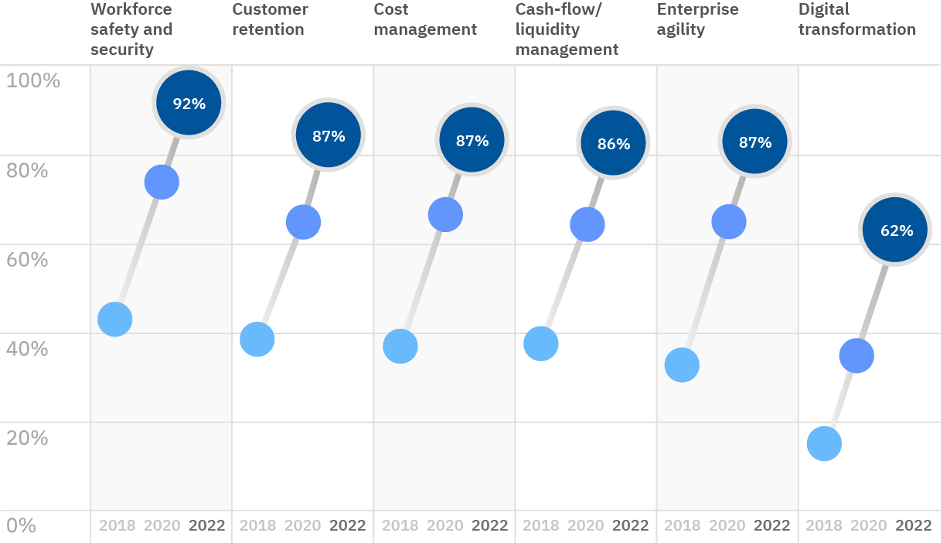
Two possibilities arise from digital transformation: competitiveness and workforce resilience.
Business leaders' need for speed and flexibility has amplified. What the community needs at this instant is unrelenting disruption, rapidly evolving customer expectations and an unprecedented pace of change.
Motivation is not aspirational— it has become existential.
Epiphany #1: Digital transformation does not only equal advancement in technology.
Adaptability is now an essential process to enhance business competencies, and change is regular. COVID-19 has accelerated digital transformations. There is a cultural shift that is prevailing and helping to reduce costs and build transformative initiatives.
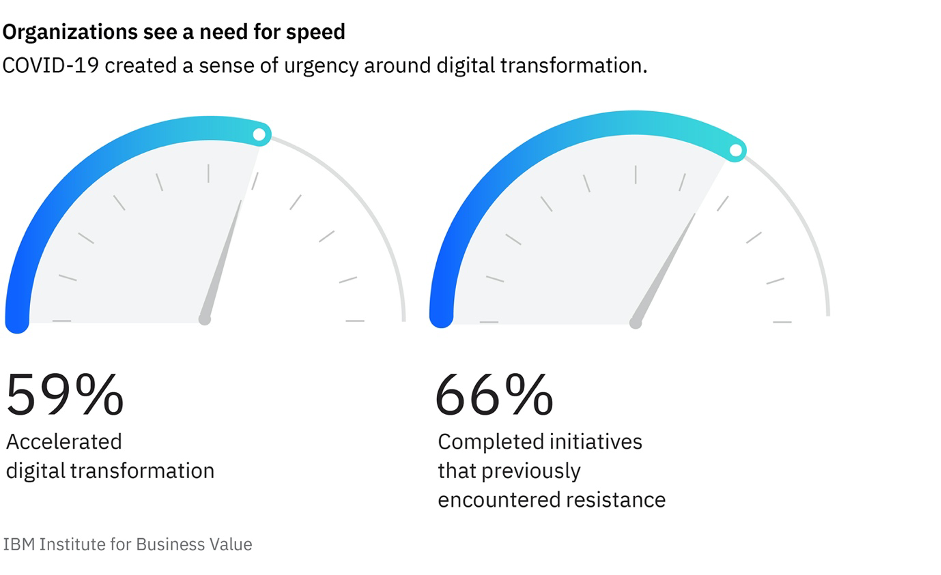
During the Before COVID-timeline, many organizations distrusted their technological capabilities and doubted the skills of their team. Now, those anxieties and reactions are largely unfounded.
Executives are trusting technology and realizing the power it can bring to a business. Digital transformation such as AI, IoT, blockchain, and cloud are investment technologies happening right now. Organizations with their game-face ready are now ready to stack the deck for success and ensure their people are capable, resilient, and adaptable.
Epiphany #2: Success and Growth? It all lies with the human touch.
There is not an iota of doubt that the secret to success lies in Human Resources. Workforce training and customer experience management need the element of human touch. Organizations are beginning to center their growth around employees and customers.
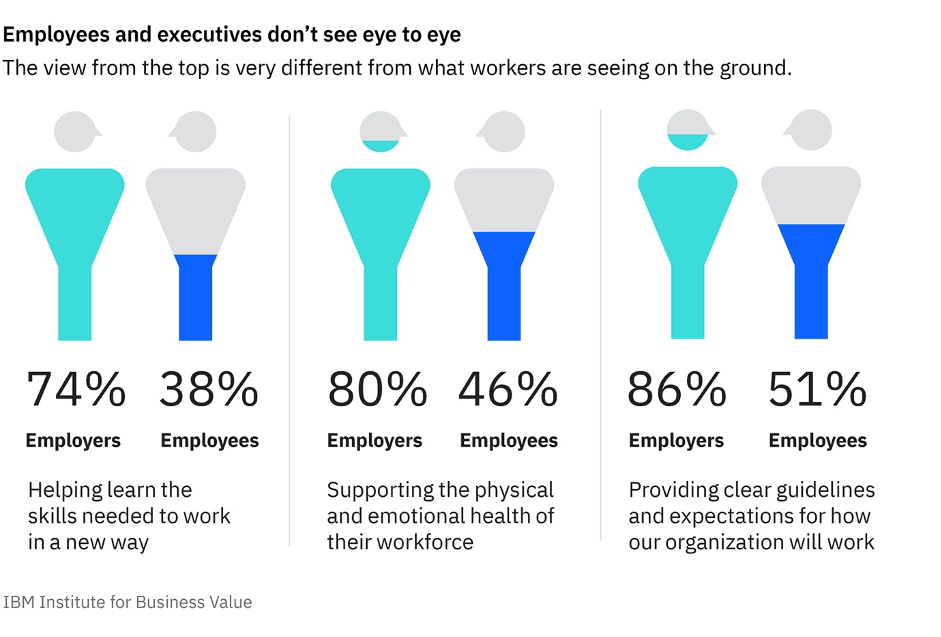
While workforce safety, skills, and flexibility are crucial, employee satisfaction has deprioritized. Executives visualize their employees have been under intense pressure, and they declare that employee well-being is among their highest priorities.
However, there is an evident gaping chasm between what executives think they are providing their employees and how those employees experience. There is a massive opportunity for leaders and innovators to get this sorted.
Let us not be fooled: the trust gap is not just about perceptions. On the contrary, there is sufficient foundation for employee skepticism about corporate commitment.
Epiphany #3: Where is the corporate strategy when all employees see is
traumatic stress?
The top priorities are workforce safety and resilience, cost management, and organization agility. The pandemic has amplified new business fears. How can executives draft strategies when they are doing damage control?
IT resiliency and cybersecurity concerns have skyrocketed. PreCOVID19 commitment to business agility, artificial intelligence, data and analytics, and other emerging technologies has grown. Of course, all of this should be important but not at the cost of customer experience.
Remember: when the competition is lost in the fog, customer experience drives performance and growth.
Epiphany #4: Loses and gains are temporarily permanent. Do not dive into it alone.
“Amazon and Apple…”: those two companies in one sentence make it sound like a precedented. Not quite.
Amazon is up by 78%, and Apple is up by 60%. The Amazons and Apples make it sound easy for solo players, but businesses need partnerships and ecosystems. What business owners must understand is that scale does not predict above-par performance. Size and Flexibility are characteristics poised for success.
Entities that operate with consistent agility can remain steady. Growth and competitiveness demand an ongoing process of discipline and decisiveness in managing business ventures and expansions.
The pandemic taught people an important lesson: approving and allocating resources must be scrutinized. This thought is etched forever.
Epiphany #5: Health and Sustainability are lock and keys
When we utter the word sustainability, we tend to link it to the environment. Consumers chose brands that showcased authenticity in these areas. But when faced with a human health crisis, priorities change.
Individual packaging is helping businesses to thrive. Disposable masks and gloves protect people. It is disheartening, but actions like these pit environment against earthlings.
Planet and People; Home and Homo sapiens are inextricably linked. Concerns for our home remain; health and safety are conjoined to broaden the term sustainability.
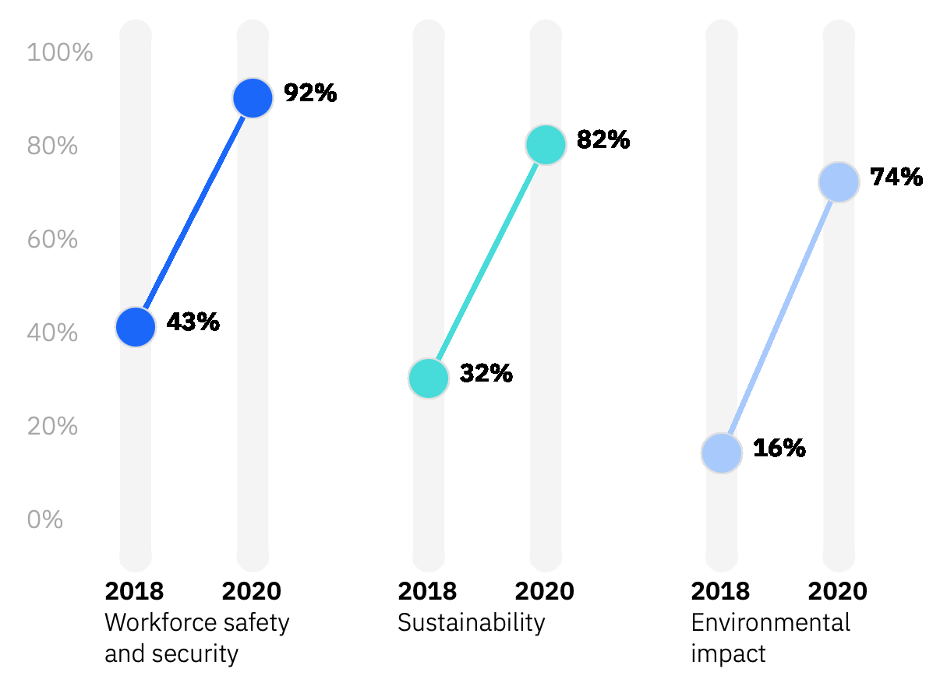
It is a challenging and critical concern to improve business operations and perspectives. Businesses must thrive in this area, and new data and efficiency will help with just that.
What now? What is next?
Now that we have established 2020 was a wake-up call, we must understand that 2020 was also a bitter reality. The pandemic-induced changes are something we should continue to capitalize on tactics, operations, management decisions, and budgets are significant – but let us not forget to make it relevant to today. The investment in digital technology, transformation, and cloud operations to accelerate the business.
Let us not wait to ‘go back to normal’. Let us promise an accelerating curve ahead that presents enticing opportunities that aggregate competitiveness and manage complexities that are in tandem with digital transformations to enhance business operations.
Employee burnout and organizational complexities are hurdles and obstacles to the growth of the organization. These serve as opportunities to build better working environments and a better world. Intrinsic qualities like building trust and confidence are critical.
Now. The time is now.
Adapt to new changes, implement strategies that help you navigate this new environment.
Let your leadership inspire. Provide a helping hand, ensure you provide flexible work options, emphasize the concept of mental health and stability. It will drive trust, bring in the right talent and create a harmonic work environment.
AI, Automation, and Tech. The combo we need to learn to love. Focus on supply chain resiliency, cyber security, and automation of AI.
Let your scalability and flexibility rise to the occasion. There is no going back to normal. Crisis management is something companies need to consider and create an action plan for the uncertainty. It does sound absurd, but an action plan to tackle uncertainties helps employees and businesses during change.
Comments